
How Real-Time Solar Power Monitoring Systems Help Detect Performance Loss Early
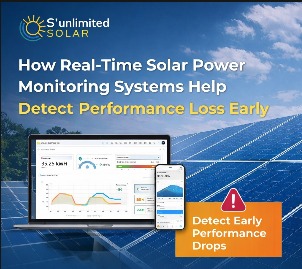
Solar Power Monitoring System: Detect Performance Loss Early
Solar power systems are designed to generate clean energy efficiently for many years. However, even high-quality solar installations can experience performance drops due to dust accumulation, shading, inverter issues, or wiring faults. Without proper monitoring, these problems can remain unnoticed and lead to reduced energy generation. A solar power monitoring system helps detect these issues early by tracking the real-time performance of your solar plant. With advanced solar monitoring solutions, homeowners and businesses can monitor energy generation, identify system inefficiencies, and take corrective action before losses increase.
In this blog, we explain how real-time solar monitoring works and why it is essential for maintaining the efficiency of modern solar power systems.
What Is a Solar Power Monitoring System?
A solar power monitoring system is a digital platform that tracks and displays the performance of a solar power plant. It collects data from inverters, sensors, and energy meters to provide real-time insights into electricity generation and system performance.
A modern solar energy tracking system allows users to monitor their solar plant through mobile apps or web dashboards. These systems provide detailed analytics such as daily generation, system efficiency, and energy savings.
With real-time solar system monitoring, users can easily understand how their solar panels are performing at any given time.
Why Monitoring Solar Performance Is Important
Even small issues in a solar plant can lead to significant power losses over time. For example, dust buildup on panels, inverter faults, or damaged cables can reduce energy production without immediate warning.
A solar power tracking system continuously analyzes system performance and alerts operators when output drops unexpectedly.
Key benefits include:
- Early detection of system faults
- Improved solar plant efficiency
- Reduced maintenance costs
- Better long-term return on investment
With reliable solar monitoring solutions, solar plant owners can ensure their systems operate at peak performance.
How Real-Time Solar Monitoring Detects Performance Loss
1. Real-Time Energy Generation Tracking
A solar energy tracking system records the electricity generated by solar panels throughout the day. By comparing actual energy output with expected performance, the system can detect unusual drops in generation.
If the system notices lower-than-normal energy production, it can trigger alerts so maintenance teams can investigate the cause.
2. Identifying Panel-Level Issues
Some advanced solar monitoring solutions track the performance of individual solar panels or strings. This helps identify issues such as:
- Dirty or shaded panels
- Damaged modules
- Loose electrical connections
By detecting these issues early, operators can fix the problem quickly and prevent further energy loss.
3. Inverter Performance Monitoring
The inverter is one of the most critical components in a solar plant. If the inverter stops working properly, energy production can drop immediately.
A solar power monitoring system continuously tracks inverter performance and alerts users if:
- The inverter stops producing power
- Voltage or current levels are abnormal
- System faults occur
Early detection helps avoid prolonged downtime.
4. Weather and Performance Comparison
Many modern solar energy tracker platforms combine weather data with energy generation data. This allows users to compare solar output with expected sunlight levels.
For example:
- If sunlight levels are high but energy output is low, the system may detect a technical fault.
- If cloudy weather reduces solar generation, the system can confirm the drop is normal.
This analysis helps distinguish real technical issues from environmental factors.
5. Automated Alerts and Notifications
One of the biggest advantages of solar system monitoring is automated alert systems.
When the monitoring platform detects unusual performance drops, it sends notifications through:
- Mobile apps
- Email alerts
- Web dashboards
This allows maintenance teams to respond quickly and fix problems before they affect long-term energy production.
Benefits of Real-Time Solar Monitoring for Businesses and Homes
Installing a solar power monitoring system provides several operational advantages.
1. Maximum Energy Generation: Monitoring ensures the system operates at optimal efficiency, helping solar plants generate the maximum possible electricity.
2. Faster Fault Detection: Issues such as inverter faults, cable problems, or panel shading can be detected immediately.
3. Improved System Maintenance: With performance data available in real time, maintenance teams can focus on areas that need attention instead of performing unnecessary inspections.
4. Better Financial Returns: Early detection of performance loss prevents long-term energy losses, improving the return on solar investment.
5. Transparent Energy Insights: Users can track daily, monthly, and yearly energy production and understand how much electricity their solar system generates.
Why Solar Monitoring Is Essential for Large Solar Installations
Large commercial and industrial solar plants require continuous performance monitoring. Even a small efficiency loss across a large installation can result in significant financial losses.
A reliable solar energy tracking system helps plant operators:
- Monitor multiple solar arrays
- Detect faults across large installations
- Track system efficiency in real time
- Ensure stable energy production
This makes monitoring systems essential for industrial solar projects.
Advanced Solar Monitoring Solutions by S’unlimited Solar
To help customers maximize the performance of their solar systems, S’unlimited Solar provides advanced solar monitoring solutions that track system performance in real time.
These monitoring platforms allow solar plant owners to:
- Monitor energy generation from anywhere
- Track system performance through digital dashboards
- Receive alerts when performance drops
- Optimize maintenance and system efficiency
The Future of Solar Monitoring Technology
As solar technology continues to evolve, monitoring systems are becoming smarter and more advanced.
Future solar power monitoring systems may include:
- AI-powered performance analysis
- Predictive maintenance alerts
- IoT-based sensor networks
- Advanced data analytics for energy optimization
These innovations will make solar energy systems more efficient and reliable.
Conclusion
Solar systems are long-term investments, and maintaining their efficiency is essential for maximizing energy production. A solar power monitoring system helps detect performance issues early by continuously tracking system output and identifying faults.
With advanced solar monitoring solutions, solar plant owners can improve system reliability, reduce downtime, and ensure maximum energy generation for years to come.
Real-time monitoring is no longer an optional feature; it has become an essential component of modern solar power systems.
Pournima
A content writer at S'unlimited with expertise in solar energy education, producing guides and insights that simplify complex industry concepts for homeowners and businesses.