
When Does a Solar Power Tracking System Make Financial Sense?
Solar Power Tracking System: Is It Worth It?
As solar adoption grows across industrial and commercial sectors, businesses are constantly looking for ways to maximize energy output and ROI. One solution that often comes up is a solar power tracking system.
But the real question is, does it actually make financial sense for your project?
Let’s break it down in a practical, no-nonsense way.
What Is a Solar Power Tracking System?
A solar power tracking system automatically adjusts the angle of solar panels throughout the day to follow the sun’s movement.
Unlike fixed structures, tracking systems ensure that panels receive maximum sunlight exposure, resulting in higher energy generation.
How Much Extra Energy Can You Expect?
On average:
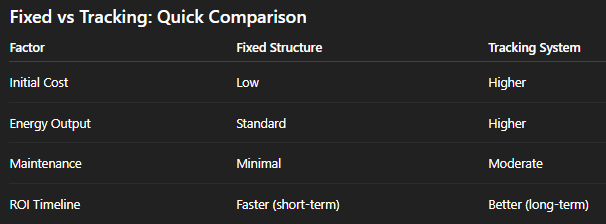
- Single-axis trackers: 10–20% more energy generation
- Dual-axis trackers: 20–30% more energy generation
However, the actual gain depends on:
- Location (sunlight availability in regions like Pune, Satara, etc.)
- Land availability
- System design and maintenance quality
When Does It Make Financial Sense?
A solar power tracking system is not always the best choice. It becomes financially viable under specific conditions:
1. When Land Is Available but Energy Demand Is High
If you have sufficient land and want to maximize output per panel, trackers can significantly boost generation.
Ideal for:
- Industrial plants
- Large commercial installations
2. When Electricity Tariffs Are High
Higher electricity costs mean faster savings.
If your business pays premium tariffs, the additional energy generated by a solar power tracking system can lead to quicker payback periods.
3. When Long-Term ROI Matters More Than Initial Cost
Trackers have higher upfront costs compared to fixed structures.
But if your goal is:
- Long-term savings
- Higher lifetime generation
Then the investment can be justified.
4. When You Have Strong O&M Support
Tracking systems involve moving parts, which means:
- Regular maintenance is essential
- Monitoring performance is critical
Without proper active monitoring, efficiency gains can drop.
When It May NOT Make Sense
A solar power tracking system might not be ideal if:
- Space is limited (rooftop installations)
- Budget constraints are strict
- Maintenance support is not available
- Simplicity and low risk are priorities
In such cases, fixed-tilt systems often provide better value.
Fixed vs Tracking: Quick Comparison
The Role of Monitoring in ROI
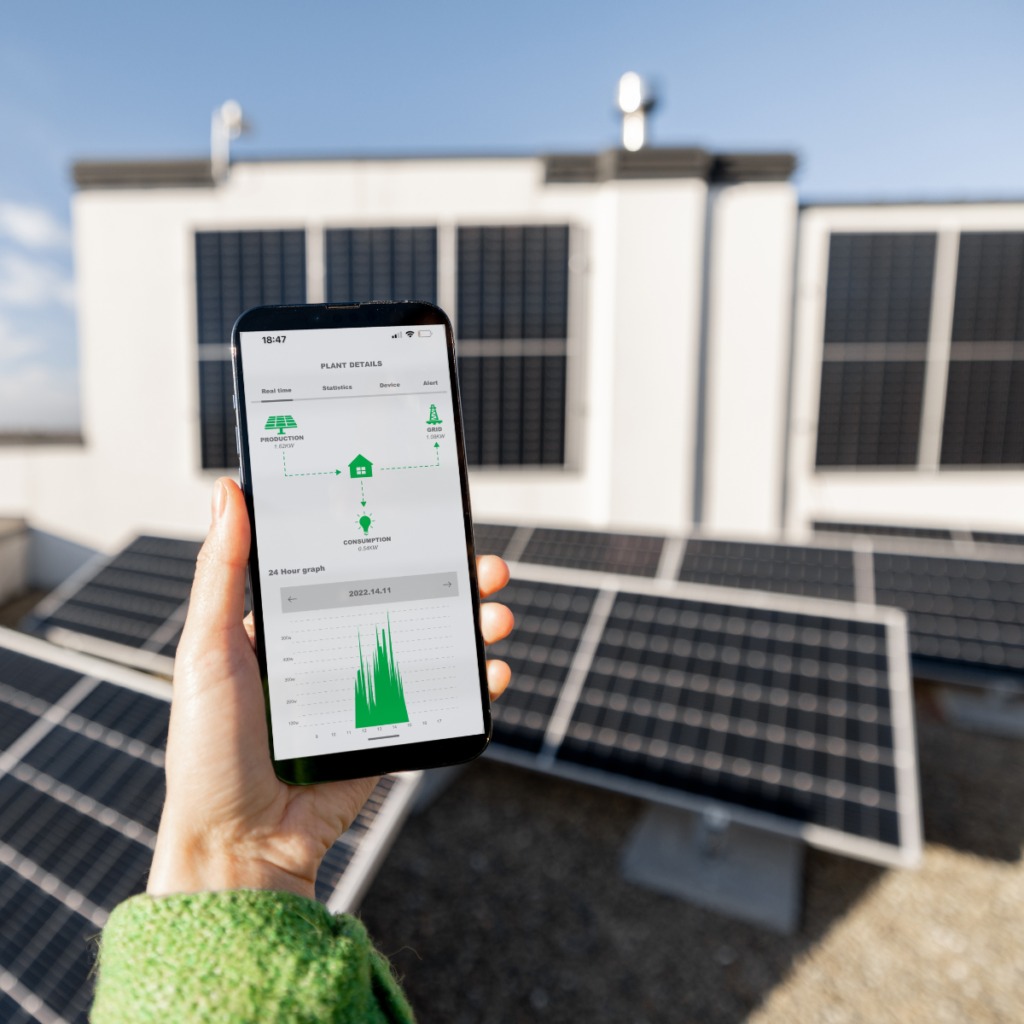
No matter how advanced your system is, performance visibility is crucial.
A solar power tracking system without proper monitoring can lead to:
- Undetected faults
- Reduced efficiency
- Lower-than-expected ROI
With active monitoring, you get:
- Real-time performance tracking
- Instant fault detection
- Data-driven optimization
Why Choose S’unlimited Solar?
At S’unlimited Solar, we don’t just install systems, we ensure they perform.
Our solutions focus on:
- Smart system design
- Efficient tracking integration
- Advanced monitoring systems
- Long-term performance optimization
We help businesses decide whether a solar power tracking system is truly worth it, based on real data, not assumptions.
Conclusion
A solar power tracking system makes financial sense when:
✔ Energy demand is high
✔ Land is available
✔ Electricity costs are significant
✔ Long-term ROI is the priority
✔ Monitoring and maintenance are ensured
If these conditions align, it can significantly boost generation and profitability.
Otherwise, a well-optimized fixed system may be the smarter choice.

Pournima
A content writer at S'unlimited with expertise in solar energy education, producing guides and insights that simplify complex industry concepts for homeowners and businesses.