
How to Choose the Right Solar System Size for a Factory in Satara
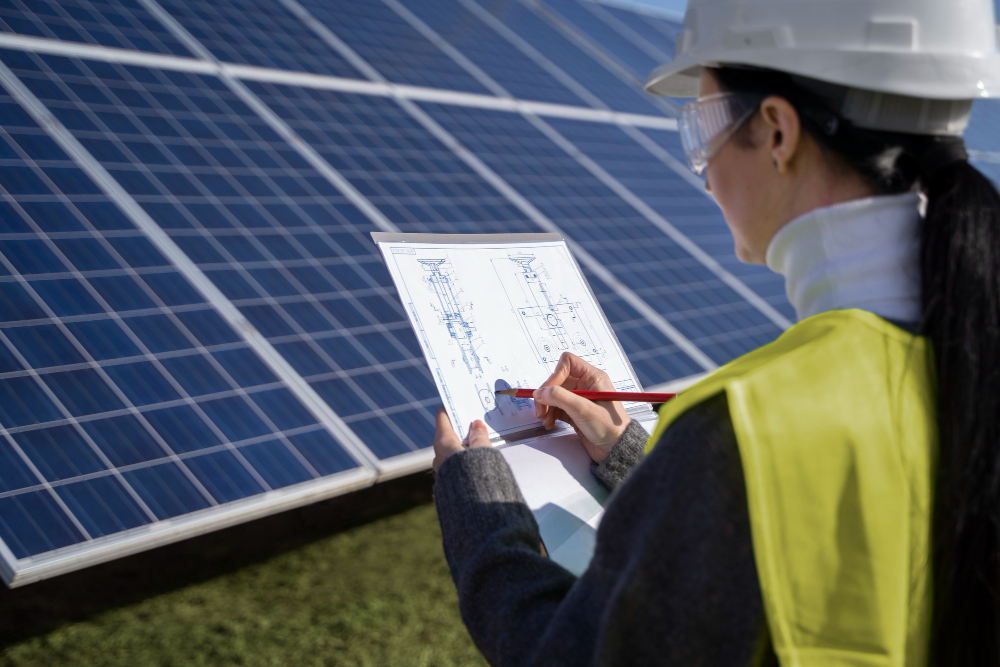
Solar Installation Company in Satara: Factory Sizing
For a factory owner in Satara evaluating rooftop solar, the sizing question usually gets answered one of two ways: either “however many panels fit on the roof” or “whatever matches last month’s electricity bill.” Both approaches miss what actually determines the right system size – and both tend to produce systems that either underdeliver on savings or get stuck at the sanctioned-load stage during DISCOM approval. Sizing a factory solar system correctly requires working backward from your actual load profile, sanctioned electrical capacity, and structural realities – not forward from available roof space. As a solar installation company in Satara working across residential, commercial, and industrial projects, this is the exact evaluation process we use before recommending a system size to any factory client.
This article walks through that process technically, so you can evaluate a proposed system size on its merits, whether you’re working with us or comparing proposals from another solar energy company in Satara.
Why Doesn’t “Maximum Roof Space” Equal the Right System Size?
This is the most common sizing mistake in factory solar projects, and it’s worth addressing directly first.
A system sized to fill every available square meter of roof assumes your factory can productively use all that generated power – which is rarely true unless your load profile has been specifically checked against it. Oversizing relative to consumption means a larger share of generation gets exported to the grid, often at lower compensation rates than the value of self-consumed power, which extends your payback period rather than shortening it.
Direct answer: The right system size is determined by your factory’s actual daytime load profile and sanctioned electrical capacity, not by how much roof area is physically available – available space is a ceiling, not the sizing target.
What Load Data Do You Actually Need Before Sizing a Factory System?
A credible sizing exercise starts with data, not estimation.
The data points that matter:
- 12 months of interval or time-of-day (TOD) consumption data, ideally in 15-minute or hourly blocks, not just the monthly total on your bill
- Shift pattern and production schedule, since a single-shift daytime operation has a very different load shape than a 24-hour multi-shift facility
- Peak demand (kVA) and sanctioned load, which caps the maximum system size your connection can support without a load enhancement application
- Seasonal production variation, particularly relevant for factories with cyclical or order-driven output
- Existing captive power or DG set reliance, which changes both the economic case and sometimes the grid interconnection approach
Did You Know? Many factories in Satara’s industrial zones run on single or double shifts with predominantly daytime operations – a load pattern that tends to align well with solar generation hours, making rooftop solar a particularly strong fit when sized correctly against that specific shift pattern.
Ask yourself: Do you have your facility’s actual hourly or interval consumption data, or only the monthly totals from your electricity bill? The former is what a proper sizing exercise requires.
How Does Sanctioned Load Affect the System Size You’re Allowed to Install?
This is a regulatory constraint as much as a technical one, and it’s frequently overlooked until late in the process.
- Most DISCOM frameworks cap your eligible solar capacity relative to your sanctioned connected load, meaning you can’t simply install whatever size your roof allows without first checking this limit.
- If your target system size exceeds what your current sanctioned load supports, you may need a load enhancement application before proceeding, which adds both time and a separate approval step.
- For net or gross metering eligibility, the applicable capacity tier can also affect which metering arrangement applies to your installation.
Quick Tip: Before finalizing any system size with a prospective installer, ask them directly: “Does this system size align with our current sanctioned load, or will we need a load enhancement application first?” This single question avoids a common and costly mid-project delay.
How Should Roof Structure and Shading Factor Into Sizing Decisions?
Available area on paper and actually usable area are rarely the same number.
What a proper structural and shading assessment accounts for:
- Roof material and condition – metal sheet roofs, RCC, and older or asbestos roofing each have different structural load capacities and may need reinforcement before installation
- Existing rooftop equipment – water tanks, exhaust systems, skylights, and walkways reduce usable area beyond the raw roof dimensions
- Fire safety clearances and maintenance walkways, which are non-negotiable space allocations in a properly engineered design
- Annual shading analysis, not a single-day observation, since shading from adjacent structures or chimneys shifts across seasons
Did You Know? Structural reinforcement needs on older factory roofing are one of the most frequently underestimated cost items in early-stage solar proposals – they only become clear once a proper structural assessment is conducted, rather than a visual walkthrough.
What’s the Right Way to Balance System Size Against Financing and Payback Goals?
Sizing isn’t purely a technical exercise – it should also reflect what financing structure and payback timeline actually make sense for your business.

Direct answer: For most factories, the most financially efficient system size is the one that offsets the majority of daytime consumption without significantly exceeding sanctioned load or available structural capacity – oversizing beyond this point typically delivers diminishing returns due to lower-value grid export.
Quick Tip: If your factory has concrete expansion plans in the next few years, it’s worth discussing this with your EPC partner at the design stage – accounting for future electrical infrastructure and physical space now avoids a costly redesign later.
What Should a Proper Sizing Proposal From a Solar Company Actually Include?
A credible proposal from any solar installation company should show its work, not just present a final number.
What to expect in a technically sound proposal:
- The load data and assumptions used to arrive at the recommended system size
- A structural and shading assessment summary, ideally with supporting documentation
- Confirmation of sanctioned load alignment, or a clear note if a load enhancement is required
- A generation projection (ideally with a confidence range, such as P50/P90 estimates) rather than a single average figure
- A clear breakdown of how the proposed size affects payback period and total projected savings
Quick Tip: If a proposal only states a system size and price without explaining the load data or structural assessment behind it, ask for that detail directly – a proper commercial solar installation company should be able to walk you through the reasoning, not just the conclusion.
Checklist: Before Finalizing Your Factory’s Solar System Size
- Do you have 12 months of interval or TOD consumption data, not just monthly totals?
- Has your sanctioned load and peak demand been checked against the proposed system size?
- Has a structural assessment confirmed your roof can support the intended system, with reinforcement needs identified if applicable?
- Has shading been assessed across the full annual sun path, not a single observation?
- Does the proposed size account for future production or expansion plans?
- Has your installer shown the load data and assumptions behind the recommended size, not just a final number?
Common Mistakes Factories Make When Sizing Solar Systems
- Sizing to maximum roof area rather than actual daytime consumption, resulting in excess low-value grid export.
- Skipping interval load data, relying on monthly bill totals that obscure actual consumption shape.
- Not checking sanctioned load limits early, discovering mid-project that a load enhancement application is required.
- Overlooking structural reinforcement needs on older industrial roofing until after contract signing.
- Ignoring planned expansion, resulting in a system that can’t scale without a costly redesign.
- Accepting a sizing recommendation without supporting data, rather than asking to see the load and structural assumptions behind it.
Why Getting Sizing Right Matters for Long-Term ROI
A factory solar investment is typically evaluated over a 20-25 year financial model. Sizing errors made at the outset – oversizing relative to consumption, or undersizing relative to achievable offset – compound over that entire period. A system sized against real interval load data and verified sanctioned capacity consistently delivers more predictable, favorable ROI than one sized against rough estimates or available roof space alone.
Quick Tip: Ask your installer for a year-by-year savings projection based on your specific sizing recommendation, not just a headline payback number – this reveals whether the proposed size genuinely matches your consumption pattern.
When Should You Bring In a Solar Installation Company for Factory Sizing?
Engage a technical solar partner early if:
- You’re evaluating a factory solar project and only have monthly bill totals, not interval consumption data.
- Your roof has structural age, shading, or layout considerations that a generic quote wouldn’t have assessed.
- You’re unsure whether your sanctioned load supports your target system size.
- You have planned production or facility expansion that should factor into system design.
- You want an independent technical review of a sizing proposal before signing an EPC contract.
FAQs
1. How do I determine the right solar system size for my factory in Satara? The right size is based on 12 months of interval or TOD consumption data, your sanctioned electrical load, and structural capacity of your roof – not simply the available roof area or a single month’s electricity bill.
2. Can I install a solar system larger than my factory’s sanctioned load? Generally, no – most DISCOM frameworks cap eligible solar capacity relative to your sanctioned connected load. If you want a larger system, you may need to apply for a load enhancement first.
3. Does roof condition affect how large a solar system my factory can install? Yes. Older roofing, particularly metal sheet or asbestos roofs, may have structural limitations requiring reinforcement, which can affect both the maximum feasible system size and overall project cost.
4. Is it better to size a factory solar system for maximum roof coverage or actual consumption? Sizing to actual daytime consumption generally delivers better financial returns, since oversizing relative to load typically results in more generation being exported to the grid at lower compensation rates than self-consumed power.
5. What happens if my factory’s load profile changes after installing solar? If you’ve planned for expansion during the design stage, the system can often be scaled accordingly. Without this planning, significant load changes may require a separate assessment or additional installation phase.
6. How long does a technical sizing and feasibility assessment take for a factory? Timelines vary based on facility complexity and data availability, but a proper assessment involving interval load review, structural evaluation, and shading analysis typically takes longer than a basic walkthrough-based estimate, reflecting its greater technical depth.
7. What’s the difference between a solar company that sizes systems by roof area versus load data? A company sizing by roof area is optimizing for maximum installation, which doesn’t necessarily align with your actual consumption or financial goals. A company sizing by load data is optimizing for genuine ROI based on how your factory actually uses electricity.
8. Does S’unlimited Solar manufacture the solar panels used in installations? No. S’unlimited Solar works as an EPC and solutions partner, handling energy audits, feasibility assessment, system design, installation, and ongoing O&M – sourcing quality-certified equipment rather than manufacturing panels directly.
Conclusion
Choosing the right solar system size for a factory in Satara isn’t a matter of maximizing roof coverage – it’s a technical exercise grounded in actual load data, sanctioned capacity limits, and structural realities. Factories that size their systems against interval consumption data and verified feasibility assessments consistently see more predictable, favorable returns than those sized against rough estimates or available space alone.
As a solar installation company in Satara working across residential, commercial, and industrial projects, this data-driven approach is central to how we evaluate every factory project before recommending a system size.
Ready for a Technical Sizing Assessment for Your Factory?
S’unlimited Solar conducts energy audits, feasibility studies, and system design for factories in Satara – sizing systems around your actual load profile, not just available roof space.
Request a technical consultation and site assessment today →
Get a system size based on engineering and data – with zero obligation.

Pournima
A content writer at S'unlimited with expertise in solar energy education, producing guides and insights that simplify complex industry concepts for homeowners and businesses.