
Designing a Home Solar System: Roof Space, Panel Layout and Aesthetics Explained
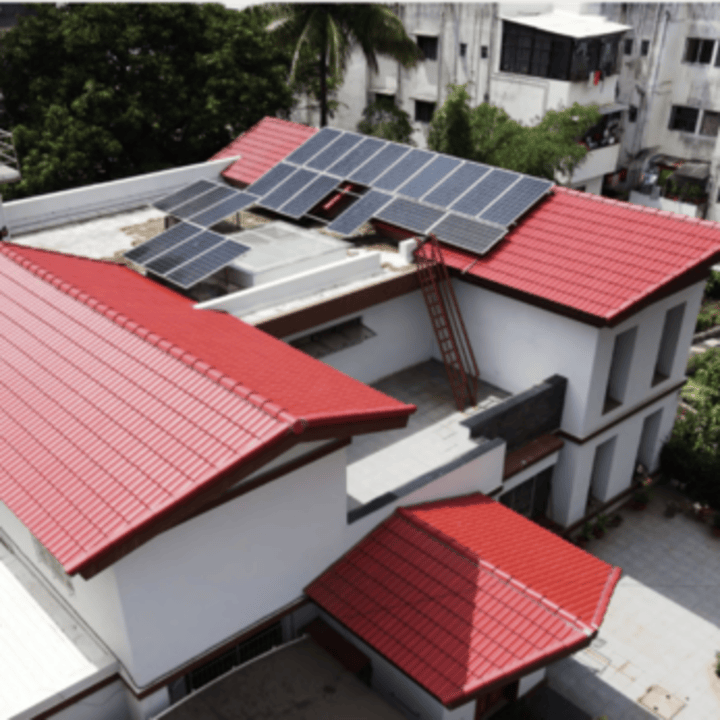
Solar Panel Design for Home: Layout & Aesthetics
Most homeowners assume solar design is simple: measure the roof, fit as many panels as possible, done. In reality, thoughtful solar panel design for home involves a lot more than just maximizing panel count – it’s about balancing available space, generation efficiency, and yes, how the finished installation actually looks on your roof.
That last part surprises a lot of people. Aesthetics genuinely matter to homeowners, especially for properties with visible rooftops, heritage-style homes, or neighborhoods with strong visual character. A good design doesn’t force you to choose between performance and appearance – but getting that balance right requires actual design expertise, not just a standard template applied to every roof.
This blog walks through exactly how roof space, panel layout, and aesthetics come together in proper home solar design, and why working with an experienced solar design consultant makes a real difference in the outcome.
Quick Answer: What Goes Into Good Solar Panel Design for a Home?
Thoughtful solar panel design for home installations typically balances three core considerations:
- Roof space and structural suitability – how much usable area exists, and whether it can support the intended system size
- Panel layout and orientation – positioning panels to maximize sunlight capture while working around obstructions
- Visual integration – arranging panels in a way that looks clean and intentional, not haphazard, especially on visible roof sections
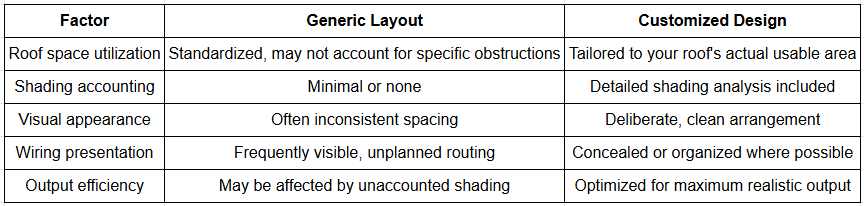
Quick Tip: A well-designed system should feel like it was planned for your specific roof, not simply dropped onto it – this difference is usually obvious once you compare a generic layout against a properly customized one.
Step 1: Understanding Your Actual Roof Space
Before any layout decisions can be made, a proper site assessment determines exactly how much usable space your roof offers.
What affects usable roof space:
- Existing obstructions – water tanks, skylights, chimneys, staircase access, HVAC units
- Roof shape – flat RCC roofs offer more layout flexibility than sloped or irregular roofs
- Shading patterns – trees, neighboring buildings, or parapet walls that cast shadows during parts of the day
- Structural load capacity – confirming the roof can safely support the intended system weight
Did You Know? Many homeowners overestimate their usable roof space by not accounting for shading buffers and safety clearances around obstructions – a proper site assessment typically reveals a more accurate, sometimes smaller, usable area than initial visual estimates suggest.
Ask yourself: Have you actually measured your roof’s clear, unobstructed area, or are you estimating based on the total roof size? These numbers are often quite different.
Step 2: Panel Layout and Orientation Planning
This is where technical design expertise genuinely shows its value – the same roof space can be laid out in very different ways, with meaningfully different performance outcomes.
Key layout considerations:
- Orientation – south-facing sections generally receive the most consistent sunlight, though east-west layouts can work well for specific consumption patterns
- Tilt angle – optimized based on your specific location’s latitude and typical sun path throughout the year
- String design – grouping panels electrically in a way that minimizes the impact of partial shading on overall output
- Spacing and clearances – maintaining appropriate gaps for maintenance access and ventilation
Quick Tip: A single shaded panel in a poorly designed string can drag down the output of the entire string, not just that one panel – this is exactly why proper layout planning by a skilled solar design engineer matters as much as panel quality itself.
Step 3: Balancing Performance With Aesthetics
This is the part often overlooked in generic solar conversations, but it genuinely matters to many homeowners – especially for properties where the roof is visible from the street, a neighboring building, or a rooftop terrace used regularly.
Design choices that affect appearance:
- Panel alignment and spacing – a neat, evenly spaced grid layout looks significantly more intentional than a scattered arrangement
- Wiring and conduit routing – concealed or neatly organized wiring makes a noticeable visual difference
- Frame and mounting color – matching or complementing your roof’s existing color scheme where possible
- Avoiding visible obstructions – designing around existing rooftop features rather than working awkwardly against them
Real-world example:
A homeowner with a heritage-style property in Pune wanted solar without compromising the home’s visual character, since the roof was visible from a shared terrace space. Rather than defaulting to a standard layout, a solar power plant consultant worked through several layout options, ultimately positioning panels on a less visible rear roof section combined with careful wiring concealment – achieving full target system capacity without disrupting the home’s appearance from the areas that mattered most to the homeowner.
Did You Know? Aesthetic considerations don’t have to come at the cost of performance – with proper planning, most homes can achieve both a clean, deliberate appearance and full target system capacity, as long as design decisions are made early rather than as an afterthought.
Comparison: Generic Layout vs Customized Design
Why Customization Matters More Than People Expect
A customized energy solution isn’t just a nicer-sounding phrase – it reflects a genuinely different design process compared to applying a one-size-fits-all template.
- Every roof is different – shape, obstructions, orientation, and shading vary significantly even between neighboring homes
- Every household’s consumption pattern is different – system sizing and layout should reflect your actual usage, not a generic assumption
- Every homeowner’s aesthetic priorities are different – some prioritize maximum output regardless of appearance, others want a cleaner visual integration even if it means a slightly different layout approach
Quick Tip: When comparing installers, ask specifically how they approach layout planning for roofs with obstructions or aesthetic considerations – a confident, detailed answer signals genuine design expertise, while a vague response suggests a more generic, template-based approach.
Common Mistakes in Home Solar Design
- Assuming maximum panel count always means maximum output, without considering shading-related losses from a poorly optimized layout.
- Ignoring aesthetic considerations entirely, leading to installations that feel visually disconnected from the home.
- Not accounting for future roof access needs, like maintenance clearances or terrace usage.
- Overlooking wiring and conduit planning, resulting in an untidy, unplanned appearance.
- Choosing a generic layout template rather than a design based on your roof’s specific shape and obstructions.
- Not discussing aesthetic priorities with your installer upfront, assuming this isn’t something they can accommodate.
Checklist: What to Discuss With Your Solar Design Consultant
- Has a proper site visit and shading analysis been conducted for your specific roof?
- Have you discussed your usable roof space realistically, accounting for existing obstructions?
- Has the layout been explained in terms of orientation, tilt, and string design reasoning?
- Have you raised any aesthetic priorities – visibility, wiring concealment, panel arrangement?
- Does the proposed design account for future access needs like maintenance or terrace usage?
- Have you seen examples of similar customized designs the consultant has completed before?
ROI Insight: How Good Design Protects Your Long-Term Value
Since solar systems are expected to perform for 20-25 years, even modest improvements in layout efficiency compound significantly over that lifespan. A well-designed system captures more usable sunlight, experiences fewer shading-related losses, and requires less troubleshooting down the line – all of which directly protect your expected savings.
Quick Tip: When comparing quotes, ask each installer what expected annual generation their specific design promises for your roof – not just a generic system-size-based estimate – since layout quality directly affects this number.
When Should You Contact a Solar Expert?
Reach out to a solar design consultant if:
- Your roof has partial shading, obstructions, or an irregular shape that complicates standard layouts.
- Aesthetics matter to you, and you want a design that balances appearance with performance.
- You’re comparing quotes that seem to offer similar system sizes but very different pricing.
- You want to understand how your specific roof’s layout will affect expected generation.
- You’re unsure whether your current installer’s proposed design is genuinely optimized for your property.
A proper design consultation can reveal both performance and aesthetic possibilities that a generic quote conversation often misses entirely.
FAQs
1. Does solar panel design really affect how much power my home system generates? Yes, significantly. Panel orientation, tilt, string design, and shading accommodation all directly affect how much usable sunlight your system actually captures, even with identical panel equipment.
2. Can solar panels be designed to look better on my roof? Yes. Thoughtful layout planning, wiring concealment, and panel arrangement can create a cleaner, more intentional appearance without necessarily sacrificing system performance, especially when discussed with your installer early in the design process.
3. How do I know how much usable roof space I actually have for solar? A proper site assessment, accounting for obstructions, shading buffers, and structural considerations, gives a much more accurate picture than a rough visual estimate of total roof area.
4. Does a customized solar design cost more than a standard layout? Design quality itself doesn’t necessarily add significant cost, but it does require more upfront planning time from your installer – the value shows up in better long-term output and, often, a more visually cohesive result.
5. What’s the difference between a solar design engineer and a general installer? A solar design engineer focuses specifically on layout, shading analysis, string design, and system optimization, while general installation involves the physical mounting and wiring work – the best outcomes typically come from combining both areas of expertise.
6. Can I request a specific panel arrangement for aesthetic reasons? Yes, most experienced solar consultants can work with your aesthetic preferences, though it’s important to discuss this upfront so it factors into the initial design and quote, rather than as a late-stage change.
7. Does roof shape affect what kind of solar design is possible? Yes. Flat RCC roofs generally offer more layout flexibility, while sloped or irregular roofs require more careful planning to optimize both orientation and visual arrangement.
8. How do I find a good solar design consultant in India? Look for consultants or companies with demonstrated experience handling custom layouts, particularly properties with obstructions or aesthetic considerations, and ask to see examples of past customized designs.
Conclusion
Good solar panel design for home installations goes well beyond simply fitting the maximum number of panels onto available roof space. Thoughtful consideration of usable area, panel layout and orientation, and aesthetic integration together determine whether your system performs at its full potential and looks like a deliberate part of your home, rather than an afterthought bolted onto the roof.
Whether your priority is maximum output, a specific visual outcome, or a genuine balance of both, working with an experienced solar design consultant from the start makes that outcome achievable – rather than something you have to compromise on.
Ready for a Solar Design Built Around Your Home?
S’unlimited Solar’s customized designing process combines detailed site assessment, layout planning, and aesthetic consideration to create a system that performs well and looks right on your specific roof.
Request your free consultation and site survey today →
Get a solar design built for your home, not a generic template – with zero obligation.

Pournima
A content writer at S'unlimited with expertise in solar energy education, producing guides and insights that simplify complex industry concepts for homeowners and businesses.