
How to Select the Right Solar Plant Capacity for Commercial Use
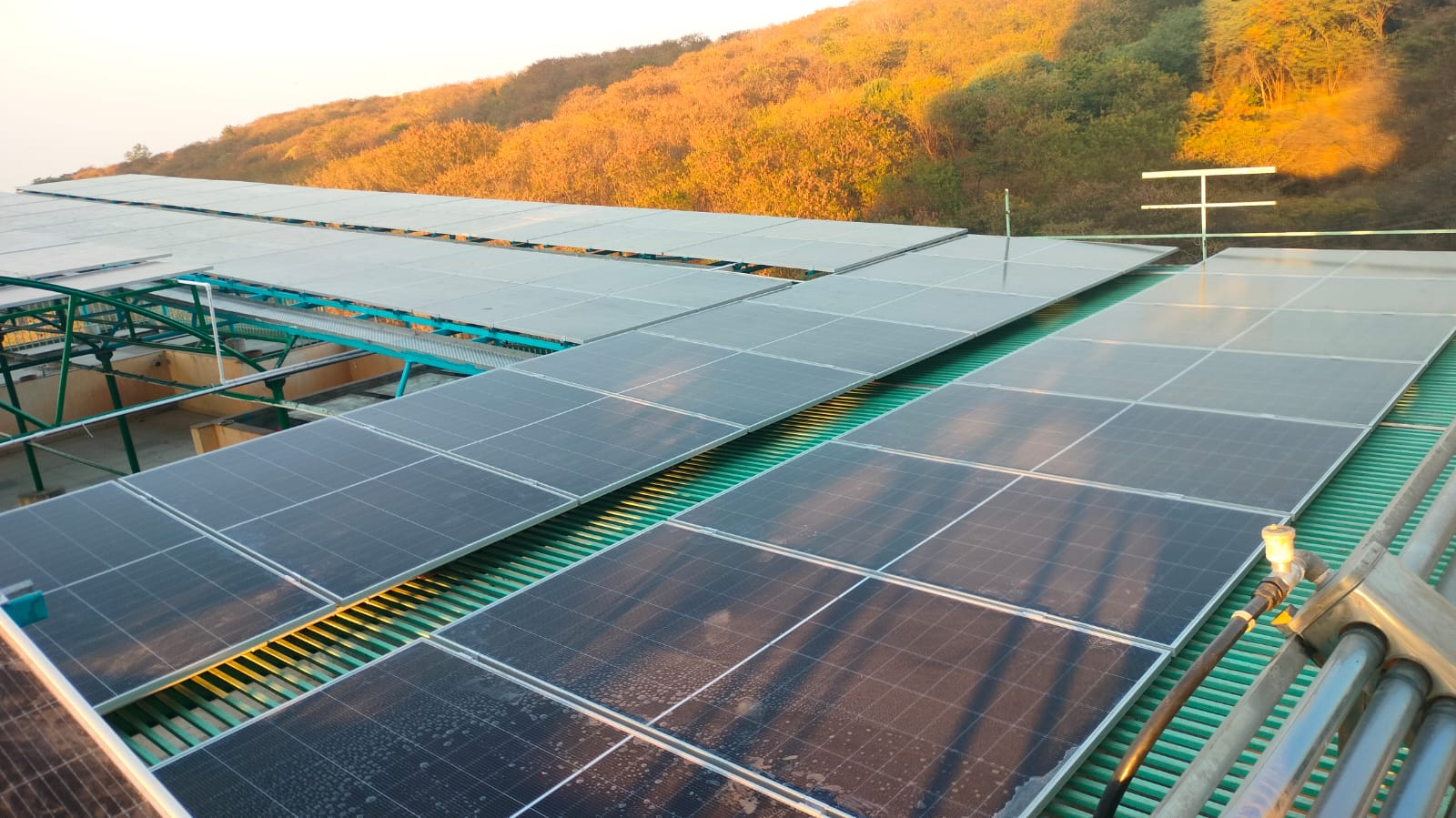
Solar Panel for Commercial Use: Choose the Right Capacity
As electricity costs continue to rise, businesses across India are investing in solar panel for commercial use to reduce operational expenses and improve sustainability. However, one of the most common questions business owners ask is, “What solar plant capacity is right for my business?”
Choosing the correct solar system size is essential. An undersized plant may not deliver the expected savings, while an oversized system can increase your initial investment without providing proportional returns.
This guide explains how to determine the ideal commercial solar plant capacity and the factors every business should consider before installation.
Why Solar Capacity Matters
The capacity of a commercial solar plant directly affects:
- Monthly electricity bill savings
- Return on investment (ROI)
- Energy independence
- Future expansion possibilities
- Overall system efficiency
Selecting the right capacity ensures your investment generates maximum value over the system’s 25+ year lifespan.
Step 1: Analyze Your Monthly Electricity Consumption
The first step is reviewing your electricity bills from the last 12 months.
Look for:
- Monthly units (kWh) consumed
- Maximum demand
- Seasonal consumption variations
Businesses such as factories, hospitals, hotels, schools, warehouses, shopping complexes, and office buildings often experience fluctuating electricity usage throughout the year. Using annual consumption provides a more accurate estimate than relying on a single month’s bill.
Step 2: Identify Available Rooftop Space
The size of your roof determines how many solar panels can be installed.
A professional site survey evaluates:
- Roof dimensions
- Shadow-free areas
- Structural strength
- Roof orientation
- Future maintenance access
For businesses considering commercial rooftop solar installation, optimizing rooftop space is just as important as selecting high-efficiency panels.
Step 3: Consider Your Business Operating Hours
Solar panels generate electricity during daylight hours.
Businesses operating mainly between 8 AM and 6 PM benefit the most because they consume solar power as it is generated.
Examples include:
- Manufacturing units
- Educational institutions
- Commercial offices
- Hospitals
- Hotels
- Warehouses
Understanding your daily load profile helps determine the most suitable plant capacity.
Step 4: Plan for Future Business Growth
Many businesses expand operations within a few years.
If you expect to:
- Add machinery
- Increase production
- Expand office space
- Install EV charging stations
your energy demand will also increase.
Planning for future consumption allows the solar system to support long-term growth without requiring major modifications later.
Step 5: Understand Net Metering
Net metering allows businesses to export excess electricity to the grid and receive credits.
However, the ideal system size should generally match your annual electricity consumption rather than significantly exceeding it. This ensures better financial returns while complying with applicable regulations.
A qualified solar expert can recommend the optimal capacity based on your consumption pattern and local utility guidelines.
Step 6: Evaluate Your Budget and ROI
Commercial solar should be viewed as a long-term investment rather than an expense.
When evaluating a project, consider:
- Installation cost
- Annual electricity savings
- Payback period
- Government policies (where applicable)
- System lifespan
- Maintenance requirements
Well-designed commercial solar energy solutions typically recover their investment within a few years while continuing to generate savings for decades.
Common Commercial Solar Plant Capacities
The ideal system varies by business size.
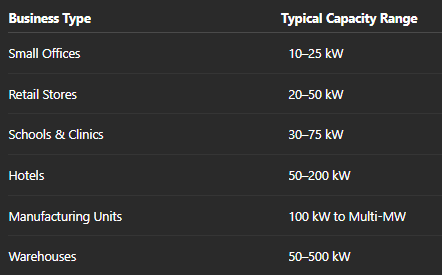
Actual capacity should always be determined after a professional energy assessment.
Why Professional Assessment Matters
Every commercial property has unique energy requirements.
An experienced installer evaluates:
- Energy consumption
- Roof suitability
- Electrical infrastructure
- Financial feasibility
- Expected energy generation
This ensures your investment delivers maximum performance and long-term reliability.
Why Choose S’unlimited Solar?
At S’unlimited Solar, we design customized commercial rooftop solar solutions that match your business’s energy requirements and growth plans.
Our services include:
- Detailed energy assessment
- Site survey and system design
- High-quality equipment
- Professional installation
- Real-time monitoring
- Annual maintenance support
Whether you need a rooftop system for an office, warehouse, hotel, hospital, or an industrial rooftop solar power plant, our team helps you choose the right capacity for maximum savings and long-term performance.
Conclusion
Selecting the right solar panel for commercial use involves much more than choosing a system size. It requires understanding your energy consumption, available rooftop space, future expansion plans, and expected return on investment.
A professionally designed commercial solar system not only reduces electricity costs but also improves operational efficiency and supports your organization’s sustainability goals. Partnering with an experienced installer ensures your solar investment continues to deliver value for years to come.

Pournima
A content writer at S'unlimited with expertise in solar energy education, producing guides and insights that simplify complex industry concepts for homeowners and businesses.