
Solar Subsidy in Maharashtra: How Much Can You Actually Save in 2026?
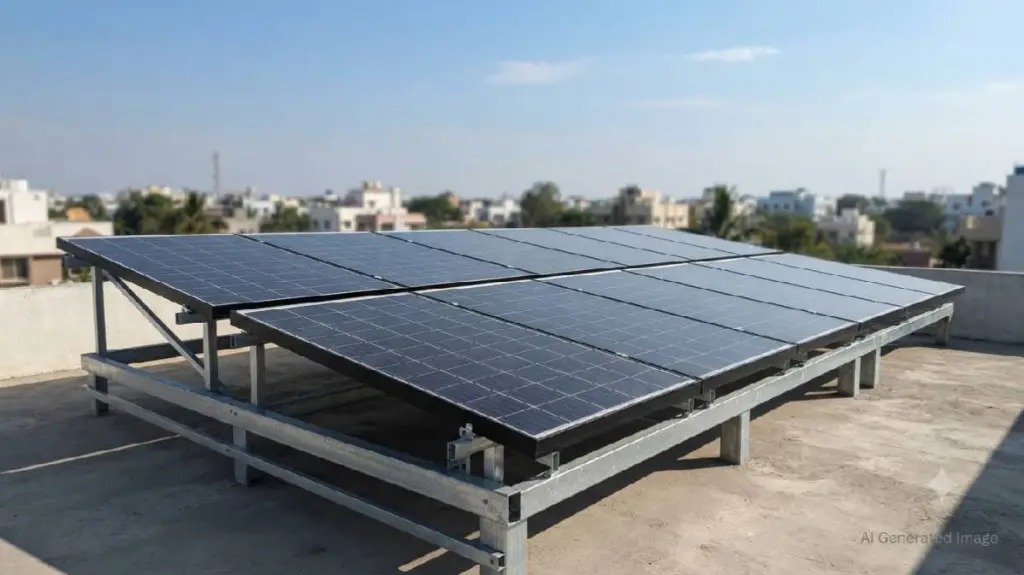
Solar Subsidy in Maharashtra 2026: Real Savings
“How much will I actually save?” is the question every homeowner eventually asks once they start seriously considering solar. It’s also the hardest one to answer with a generic number, because your real savings under solar subsidy in Maharashtra schemes depend entirely on your electricity consumption, your system size, and how the subsidy applies to your specific case.
Rather than throwing out a vague percentage, this blog walks through actual scenarios – different electricity bills, different system sizes – so you can see roughly where your own savings might land in 2026, based on your real usage rather than a generic marketing claim.
Quick Answer: How Much Can Solar Subsidy Actually Save You in 2026?
For most eligible homeowners, central government solar subsidy meaningfully reduces the upfront cost of a residential rooftop system – often making the difference between a payback period of 6-7 years and one closer to 4-5 years. The exact amount depends on:
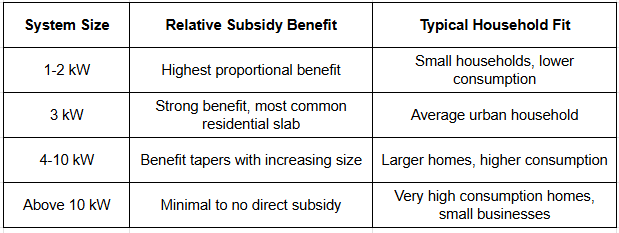
- Your system size (subsidy is typically highest, proportionally, for 1-3 kW systems)
- Current subsidy rates under the national rooftop solar program, which are periodically revised
- Whether your Maharashtra government solar subsidy eligibility adds further benefit alongside the central scheme
Quick Tip: Don’t evaluate savings based on subsidy percentage alone – always ask your installer to show you the actual rupee amount for your specific system size, since percentages can be misleading without a clear benchmark cost attached.
Step 1: Know Your Starting Point – Your Current Electricity Bill
Before estimating savings, it helps to understand your own consumption pattern.
Ask yourself:
- What’s your average monthly electricity bill over the past 12 months?
- Does your bill spike significantly during summer months due to AC usage?
- Is your household’s daytime consumption (when solar generates most) higher or lower than evening usage?
Did You Know? Homeowners who run larger daytime appliances – like water heaters, coolers, or work-from-home office equipment – often see solar offset their bills more effectively than households with primarily evening electricity usage, since generation and consumption align better.
Step 2: Understand How Subsidy Actually Reduces Your Cost
Government solar subsidy under the national rooftop solar program isn’t calculated on your installer’s exact quoted price – it’s based on a government-determined benchmark cost for your system size.
Quick Tip: Because subsidy percentages and benchmark costs are revised periodically, always confirm current rates with an empanelled installer before finalizing your system size decision – the numbers you saw last year may not reflect 2026 rates exactly.
Real-World Scenario 1: Small Household, Moderate Bill
Situation: A household with a monthly electricity bill of around ₹1,800-2,200, considering a 1-2 kW system.
For smaller systems like this, subsidy typically covers a meaningful proportion of the upfront cost, since smaller slabs receive the highest proportional benefit under the scheme. Combined with reduced monthly bills post-installation, many households in this range see payback periods in the range of 4-5 years, with 20+ years of reduced electricity costs afterward.
Real-World Scenario 2: Average Urban Household
Situation: A household with a monthly bill of around ₹3,000-3,500, considering a 3kW system – the most commonly installed residential size.
This is often considered the sweet spot for rooftop solar subsidy in Maharashtra, since 3kW systems typically balance strong subsidy benefit with meaningful bill offset. After subsidy, many households in this bracket see effective installation costs drop substantially, with payback periods commonly falling between 4-6 years depending on final subsidy amount and local tariff rates.
Real-World Scenario 3: Larger Home, Higher Consumption
Situation: A larger household with a monthly bill of ₹5,000+, considering a 5-6 kW system.
While subsidy benefit per kW tapers somewhat at this size compared to smaller systems, the overall bill reduction is often more substantial in absolute terms, since a larger system offsets more total consumption. Payback periods here often land in a similar 5-6 year range, though the total lifetime savings tend to be higher given the larger offset.
Quick Tip: If your bill regularly exceeds ₹4,000-5,000, it’s worth getting a proper site and consumption assessment rather than assuming a “standard” system size – your actual savings potential may be significantly higher with correct sizing.
What About Businesses and Commercial Properties?
The government solar scheme for home primarily targets residential customers. If you’re a business or commercial property owner, your savings path looks a bit different:
- Direct subsidy is generally limited or not applicable for commercial connections
- Businesses typically benefit more from accelerated depreciation, which reduces taxable income
- Net metering savings still apply, offsetting daytime consumption regardless of subsidy status
Ask yourself: If your business’s electricity bill is a major operating cost, have you compared the depreciation-based savings against what a residential subsidy path might look like for a comparable-sized system? These two paths can lead to meaningfully different financial outcomes.
Central vs Maharashtra-Specific Subsidy: How They Work Together
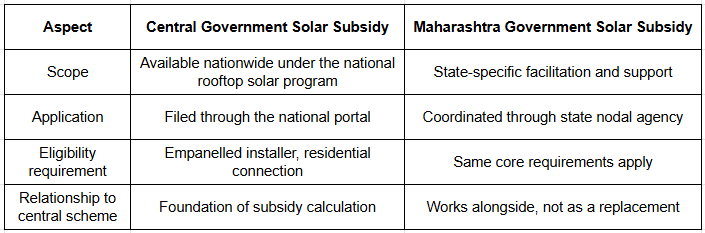
Understanding this relationship helps set realistic expectations – the solar rooftop yojana maharashtra experience is generally a combined effort between central and state-level support, not two entirely separate subsidy pools to claim independently.
Common Mistakes That Reduce Your Actual Savings
- Assuming subsidy applies to your installer’s exact quoted price, rather than the government benchmark cost.
- Choosing a non-empanelled installer to save on upfront price, losing subsidy eligibility entirely.
- Oversizing your system beyond what your consumption and subsidy slab actually support efficiently.
- Not confirming current 2026 subsidy rates before finalizing your decision, since figures are periodically revised.
- Skipping the net metering step, which delays subsidy disbursement and your realized savings.
- Comparing quotes based on pre-subsidy price alone, rather than the final post-subsidy, verified cost.
Checklist: How to Estimate Your Real Solar Subsidy Savings
- Have you reviewed at least 12 months of your electricity bills to understand your consumption pattern?
- Do you know the current subsidy slab and benchmark cost for your intended system size?
- Has your installer confirmed the current empanelment status?
- Do you have a written breakdown of pre-subsidy and post-subsidy pricing?
- Have you factored in net metering timelines when estimating when savings actually begin?
- If you’re a business, have you compared subsidy-based savings against depreciation benefits?
ROI Insight: Why System Sizing Matters More Than Subsidy Percentage
A smaller system with a higher subsidy percentage isn’t automatically the better financial choice if it doesn’t offset enough of your actual consumption. Similarly, a larger system with a lower proportional subsidy can still deliver stronger absolute savings if it’s correctly sized to your household’s real usage.
Quick Tip: The right question isn’t “which system size gets the highest subsidy percentage?” – it’s “which system size, after subsidy, delivers the best long-term savings relative to my actual electricity consumption?”
When Should You Contact a Solar Expert?
Reach out to a solar consultant if:
- You’re unsure what system size actually matches your household’s consumption.
- You want an accurate, bill-based savings estimate rather than a generic percentage.
- You’re comparing subsidy-based residential options against commercial depreciation benefits.
- You want to confirm current 2026 subsidy rates before finalizing your decision.
A short consultation, using your actual electricity bills, gives you a far more accurate savings picture than any generic online estimate.
FAQs
1. How much can I actually save with solar subsidy in Maharashtra in 2026? Savings depend on your system size and current subsidy rates, but eligible residential systems typically see meaningful reductions in upfront cost, often bringing payback periods to around 4-6 years depending on consumption and system size.
2. Does a bigger solar system always mean bigger subsidy savings? Not proportionally. Smaller systems (1-3 kW) typically receive the highest proportional subsidy benefit, though larger systems can still deliver greater absolute savings if properly sized to consumption.
3. Is the Maharashtra government solar subsidy separate from the central subsidy? No, they work together rather than as fully separate programs – the state-level support generally facilitates and supplements the central government solar subsidy rather than replacing it.
4. Do businesses get the same subsidy benefits as homeowners in Maharashtra? No. Businesses generally don’t qualify for direct residential subsidy, but often benefit from accelerated depreciation and net metering savings instead.
5. How is subsidy calculated – on my quote or a fixed government rate? Subsidy is typically calculated against a government-determined benchmark cost for your system size, which may differ from your installer’s exact quoted price.
6. What system size gets the best subsidy savings for an average household? For most average urban households, 3kW systems tend to offer a strong balance between subsidy benefit and meaningful electricity bill offset, though the ideal size depends on your specific consumption.
7. How long does it take to start seeing savings after installation? Once installation, inspection, and net metering approval are complete, savings typically begin appearing in your very next electricity bill cycle.
8. Where can I confirm the current 2026 solar subsidy rates for Maharashtra? Rates are periodically updated by MNRE and coordinated through the state nodal agency – it’s best to confirm current figures directly with an empanelled installer before finalizing your system size.
Conclusion
There’s no single number that answers “how much will the solar subsidy in Maharashtra save me” – it genuinely depends on your electricity consumption, your system size, and current 2026 subsidy rates. What’s clear across nearly every scenario, though, is that eligible homeowners consistently see meaningful reductions in upfront cost and faster payback periods when subsidy is properly applied and the system is correctly sized to their actual usage.
The best way to know your real numbers isn’t a generic online calculator – it’s a proper assessment based on your actual electricity bills and roof.
Ready to See Your Real Solar Savings for 2026?
S’unlimited Solar calculates your exact subsidy eligibility and expected savings based on your actual electricity consumption – not generic estimates.
Request your free site survey and personalized savings estimate today →
Get complete clarity on your subsidy, savings, and payback period – with zero obligation.

Pournima
A content writer at S'unlimited with expertise in solar energy education, producing guides and insights that simplify complex industry concepts for homeowners and businesses.